
Choosing and maintaining your gear
Good gear does not fly for you, but poorly chosen or poorly tuned gear can make learning harder than necessary. This page gathers videos on choosing and tuning your lines and handles, looking after the frame and fixing small breakdowns.
A guide still under construction
Choosing a sail for the conditions and the flying you have in mind is not covered here yet. To compare a brand’s models, see Choosing a model at Revolution Kites, keeping in mind that it is the manufacturer’s point of view.
Videos are in English or French. You can activate subtitles in the YouTube player if you need to: how to activate subtitles. Thanks to their authors for these tutorials.
A line set is chosen first by its weight and length, which depend on the wind, the kite and the space you have. All four lines must then stay the same length. You can also make your own sleeved line set.

Line weight and length
This tutorial introduces the two main characteristics of a line set: its weight and length.

Line equalizing
All four lines need to work as a consistent set. John Barresi shows how to compare them and correct differences in length.

Short or Long Lines for Your Revolution?
Which line length to choose: the standard sets, what shorter lines change, from 3D flying to indoor flying, and longer lines, the domain of team flying.

Making a sleeved line set
Measure, cut, and sleeve four flying lines to prepare your own set.
Handles and tuning
Section titled "Handles and tuning"Handle length, leaders and tuning knots change how the kite behaves: more or less brake, more or less responsiveness. These videos show what to adjust, and when.

Long or Short Handles for Your Rev?
11-, 13- or 15-inch handles: what handle length changes in the Rev's sensitivity, and which to choose depending on the wing, the wind and your level.

Revolution Leader Lines: What Are They and How to Use Them
Leaders, the short lines attached to the handles: what they are for, why a new Rev needs no tuning, and when to use them, in high wind, for advanced hovering or in a team.

Handles
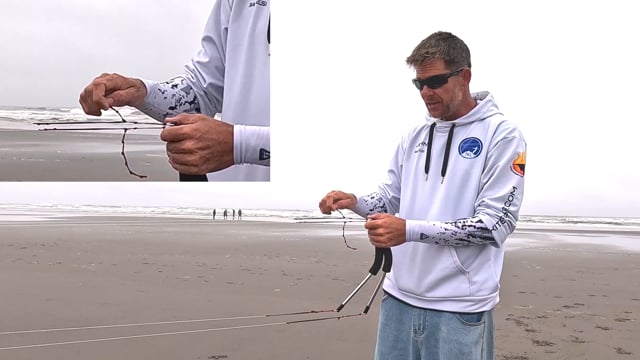
Setting up the handles: four short lines with three knots, and which knots to use in normal, light or too strong wind.
Tuning theory
Easy handle and bridle tweaks to make the kite feel “just right” — more neutral or more bite, faster or calmer — without chasing numbers. Find your sweet spot and lock it in.
Changing a spar without taking everything apart, and a travel frame in short rods that fits in a suitcase.

Changing frames
Changing a Revolution's frame without detaching it from its lines, by pushing or by bending the rod. You see how to keep the new rod from jamming next to the old one.

Rev Travel Kit Description and Assembly
What is in the Rev travel kit and how to assemble it: springs, two-piece down struts, a six-piece leading edge and spare parts.
Maintenance and repair
Section titled "Maintenance and repair"Top lines stretch faster than bottom lines and wear out when you fly with twists; a bridle can come loose at the end caps; a few spare parts keep you from ending the session on the ground.

Double the Life of Your Revolution Line Set
Why the top lines stretch more than the bottom ones, how to check it, and two simple swaps that double the life of a line set.

Revolution Line Wear and Binding: Tips from the Masters
Why lines wear out and end up binding when you fly with twists, and how to keep your spin count low, up to the pros' trick of balancing rotations within a figure.
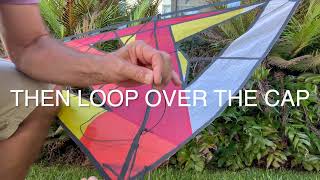
How to Reconnect a Loose Bridle Point on Your Revolution Kite
Reconnecting a bridle that has come undone at the end caps: first the bottom bridle, then the top one, the most confusing.

What's in My Rev Bag, with Quick Line Set-Up Tips
What goes in a Rev bag for the day, two wings, two line sets, stake and spare parts, and a method for storing lines with no knots or twists.
What we still want to develop
Section titled "What we still want to develop"- choosing a sail for the conditions and the flying you have in mind;
- understanding frame compatibility between models and brands;
- preparing the tools needed to repair a sail.
More videos by Joe Hadzicki on lines and care are gathered in Lines and care. For more practical advice, see Team4fun’s tips.
Last updated: — videos on handles and tuning, the frame, maintenance and repair, alongside lines
Did this page help you?
Saving…
We couldn’t save this feedback.
Thanks, your feedback helps us improve this page.
Thanks, your feedback helps us improve this page.