First flights — Revolution Kites tutorials
The basics of flying a Revolution: setting up, launching, stopping, feeling the kite at the end of the lines, and avoiding common early mistakes. Some of the videos are for two-line pilots coming to four lines, who need to unlearn the reflex of pulling.
The last videos on this page are for two-line pilots: the reflex of pulling the handle to turn does not work with a four-line kite.
Start with Get Your Rev in the Air: The Basics and Common Rev Problems for Beginners, with Solutions.

Get Your Rev in the Air: The Basics
The basics for getting a Rev in the air: setting up the lines, checking before launching, then launching, stopping and backing down, up to turns and side hovers.

Rev Basics: Set-Up, Basic Flying and Pack-Up
The whole cycle of a Rev session, step by step: unrolling the lines, assembling the kite, the first launch and first controls, then packing everything away without tangles.

Revolution Kite and Rev Eagle: Basic Setup and First Flight
Setting up a standard Rev, then a Rev Eagle, with four rules for keeping control on the ground and the steps of a successful first launch.

More Basics for Easy Rev Flying
For an easy first flight: aim for flying time, and fix four common problems, oversteering, pulling to turn, the crash-and-reverse-launch cycle and poor wind.

Common Rev Problems for Beginners, with Solutions
The most frequent beginner problems with the Rev, seen over thirty years of lessons, and their fix: lopsided launch, a Rev that will not climb, a constant turn, needless backing up and dual-line reflexes.

New to Rev? 3 Tips to Rev Mastery
What makes a level-two pilot, then three tips for giving your flying some style: have a plan, look for symmetry, aim for precision.

First Rev Lesson: Level 1 in 20 Minutes
A first-time pilot tries to pass Club 38 level 1 in twenty minutes, then tries a Condor.

The one skill every Rev pilot must know: stopping your Rev (Club 38 skill #5)
The stop, Club 38 skill no. 5: replacing the urge to pull with a forward push of both thumbs, practised on the simulator.
When to pull your Rev
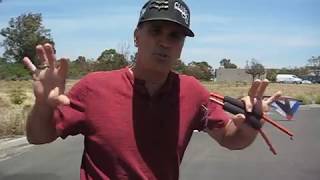
Why pilots pull on the handles: not to turn, but to slide the Rev, especially in a side hover, or to speed up one or both wings.

When to pull your Rev: it's not what you think
On a Rev, pulling is not for turning: the two real reasons to pull, sliding and speeding up, with a slide exercise towards the center of the window.

Footwork for your Rev: the Revolution two-step
Rev footwork, the 'two-step': which foot to put forward depending on which way the kite faces, and why it sets you up for the side hover.

Mastering the Revolution wind window
The wind window and what it means for a Rev pilot: stay in the centre, do not fly too close to the edge or the ground, and use the step back wisely.

Learn these three basic skills before trying advanced skills
Three basic skills to master before advanced tricks, to avoid the frustration of beginners who skip steps.

Reach Rev mastery: avoid these three mistakes
Three mistakes that hold back progress with the Rev: gripping too hard, pulling to turn and pulling to avoid a crash.

Tips to overcome basic Rev challenges
The four big challenges for new Rev pilots, from the habit of pulling to a lack of confidence, and a simple exercise or rule for each.

Fastest Rev lesson for two-line pilots
The usual way of learning the Revolution, presented to dual-line pilots: everything rests on rotating the wrists, from the launch to the first small turn from a hover.

The perfect quad-line lesson for two-line pilots
The lesson for pilots coming from two-line kites: on a Rev, pulling a handle does not turn, it slides; the turn comes from rotating the handle.
Keep going
Section titled "Keep going"- Next page: Launching.
- All topics: Revolution Kites tutorials.
- To follow a level-based path with Joe’s feedback: Club 38.
Thanks to Joe Hadzicki and Revolution Kites for these videos. The whole channel is on YouTube.
Last updated: — new page: 17 Revolution Kites videos with Joe Hadzicki's explanation as text and chapters
Did this page help you?
Saving…
We couldn’t save this feedback.
Thanks, your feedback helps us improve this page.
Thanks, your feedback helps us improve this page.